

in Accordance with International Standards
المصدر -
A Landmark Egyptian Achievement Strengthening National Leadership in Sustainability and Opening New Horizons for Carbon Markets and the Green Economy Across the Arab Region and Africa
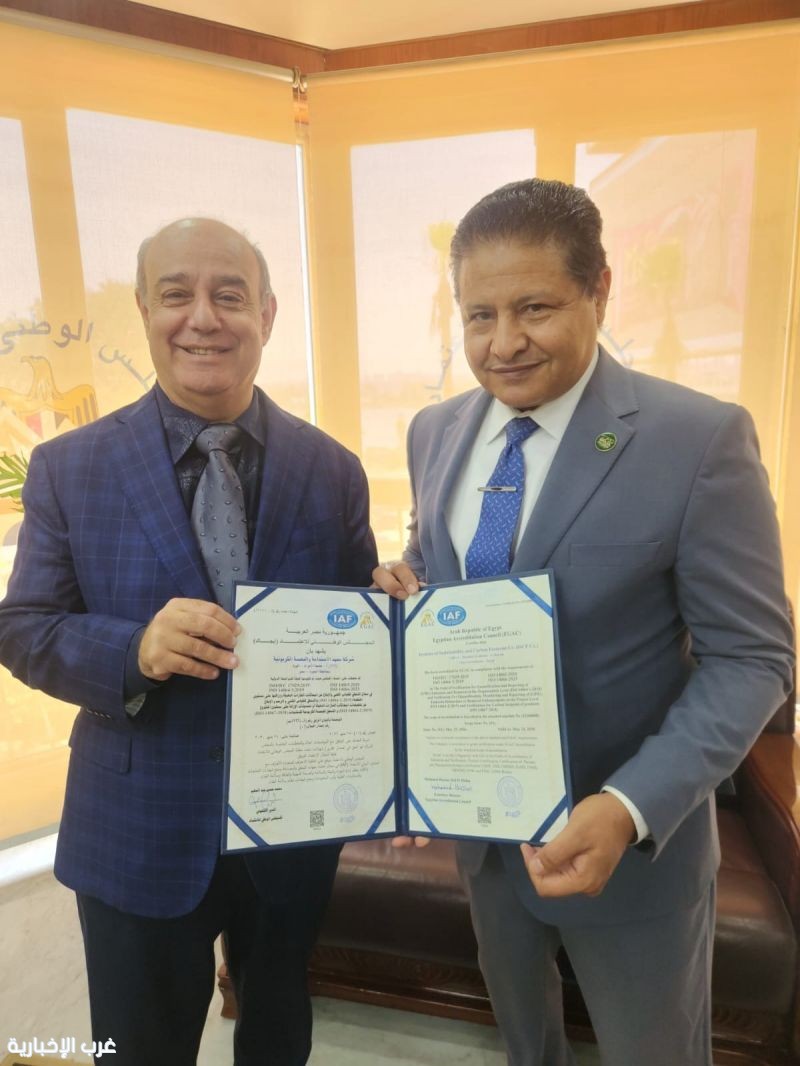
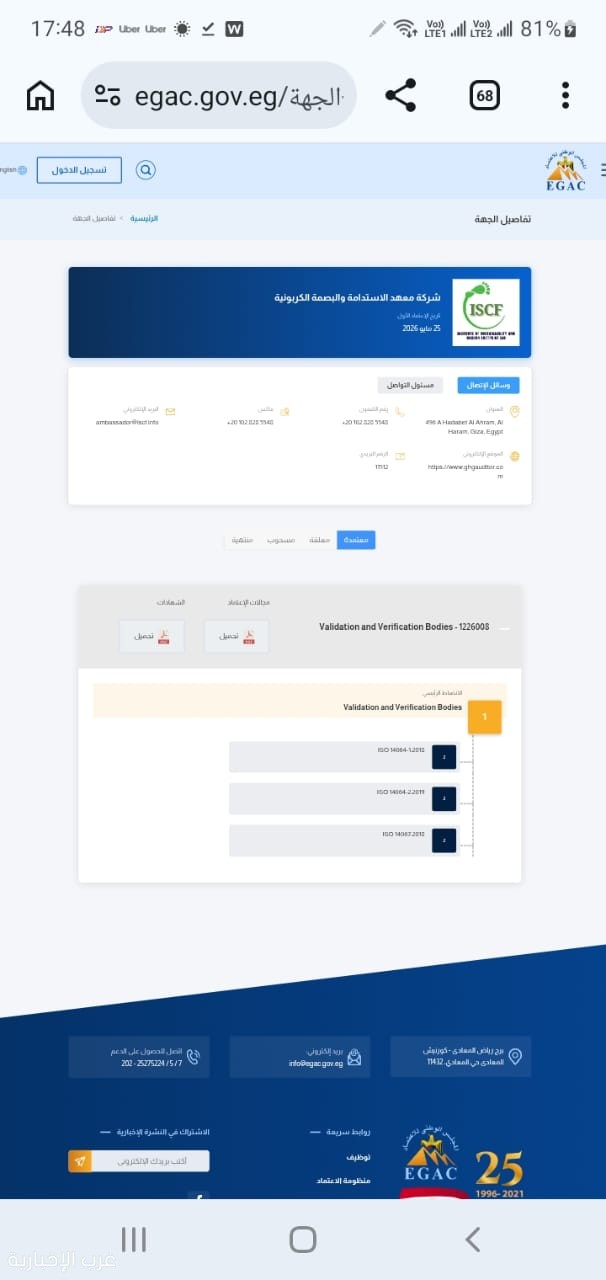
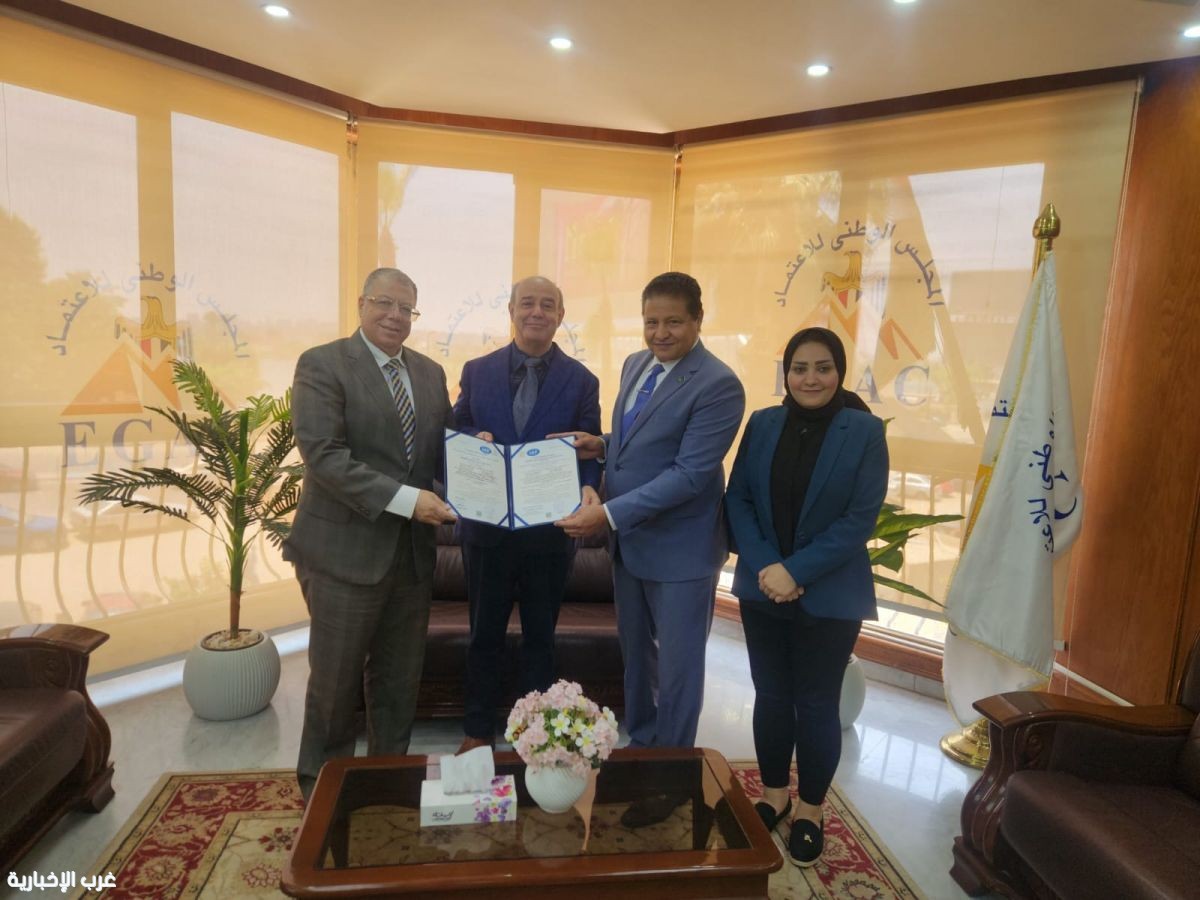
In a milestone that represents one of the most significant institutional achievements in the fields of sustainability and climate action, the Institute of Sustainability and Carbon Footprint (ISCF) has been officially accredited as a Validation and Verification Body (VVB), qualifying it to perform validation and verification services in accordance with internationally recognized standards for organizational greenhouse gas emissions, product carbon footprints, and carbon emission reduction projects.
This accreditation positions the Institute among the specialized organizations capable of delivering independent technical assurance services that enhance the credibility of environmental and climate-related reporting while meeting the growing demands of global markets.
The accreditation comes at a time when the world is undergoing a profound transition toward a low-carbon economy. Transparency in greenhouse gas emissions disclosure and compliance with international standards have become critical drivers of competitiveness, investment, and sustainable finance. Organizations are no longer expected merely to measure their emissions; they are increasingly required to demonstrate the accuracy and reliability of their data through independent, competent, impartial, and internationally recognized validation and verification bodies.
Three Strategic Areas of Accreditation
The scope of accreditation encompasses three key areas that form the scientific foundation of modern carbon management systems worldwide:
• Verification of Organizational Greenhouse Gas Emissions
Verification of greenhouse gas inventories for organizations in accordance with ISO 14064-1:2018, ensuring the accuracy, completeness, and credibility of organizational emissions reporting.
• Validation and Verification of Carbon Emission Reduction and Removal Projects
Validation and verification of projects designed to reduce or remove greenhouse gas emissions in accordance with ISO 14064-2:2019, including the assessment of project methodologies, implementation processes, and achieved emission reductions to ensure they are measurable, verifiable, and internationally recognized.
• Verification of Product Carbon Footprints
Verification of product carbon footprints in accordance with ISO 14067:2018, enabling manufacturers and producers to demonstrate the carbon impact of their products throughout their life cycle using internationally accepted methodologies.
Together, these accreditation areas establish an integrated framework serving industrial enterprises, government institutions, private-sector organizations, and environmental projects while strengthening confidence in climate-related data, which has become a fundamental component of international trade, global supply chains, and green finance.
Direct Support for Organizations and Businesses
The accreditation enables organizations to obtain independent validation and verification services that help them:
• Enhance the credibility of carbon footprint reports.
• Strengthen sustainability reports and climate disclosures.
• Meet investor and financial institution requirements.
• Prepare for international carbon-related regulations.
• Improve competitiveness in global markets.
• Support decarbonization strategies and Net Zero commitments.
Furthermore, it increases confidence among customers, international partners, and stakeholders, particularly as global markets increasingly require environmental data that has been independently verified.
Strategic Importance for Products and International Trade
Product evaluation is no longer based solely on quality and price. Carbon footprint performance has become a critical indicator in many international markets.
Through product carbon footprint verification services, manufacturers can scientifically demonstrate the environmental performance of their products, thereby enhancing export opportunities and strengthening the competitiveness of Egyptian and Arab industries in global markets.
Supporting Carbon Reduction Projects
The region is witnessing significant expansion in renewable energy, energy efficiency, waste management, sustainable agriculture, and other initiatives aimed at reducing greenhouse gas emissions.
Such projects require independent validation and verification to confirm that their outcomes comply with internationally accepted methodologies and genuinely achieve the claimed emission reductions. Consequently, the availability of an accredited Validation and Verification Body is essential for ensuring credibility and facilitating participation in carbon markets and climate finance mechanisms.
Coverage of Diverse Economic Sectors
The accreditation scope covers several strategic sectors, including:
• Manufacturing industries.
• Oil, gas, and petrochemical industries.
• Agriculture.
• Metals production.
This broad scope reflects the Institute's capability to provide validation and verification services for sectors representing a substantial share of greenhouse gas emissions and playing a vital role in global decarbonization strategies.
Independent Assurance on Sustainability Reports
The role of the Institute of Sustainability and Carbon Footprint extends beyond validation and verification services. It also supports organizations through Independent Assurance for sustainability reports and environmental and climate disclosures, an area experiencing rapid global growth due to the implementation of new sustainability reporting frameworks and increasing investor demand for reliable non-financial information.
Independent assurance provides stakeholders with greater confidence regarding the accuracy and reliability of sustainability-related disclosures, enhancing transparency while reducing the risks associated with inaccurate or unsupported information.
A Unique Scientific and Professional Position
The Institute's professional standing is further strengthened by the international qualifications of Ambassador Mostafa Sherbiny, who has earned the FSA (Fundamentals of Sustainability Accounting) credential from the IFRS Foundation, one of the world's leading qualifications in sustainability accounting and the integration of ESG information into investment decision-making and corporate reporting.
He has also obtained the Sustainability Assurance certification from the Institute of Chartered Accountants in England and Wales (ICAEW), one of the world's most prestigious professional accounting organizations, specializing in independent assurance services for sustainability reporting.
The combination of expertise in greenhouse gas validation and verification, product carbon footprint assessment, and professional sustainability assurance creates a rare competitive advantage. It enables the Institute to deliver an integrated portfolio of services covering carbon measurement, validation, verification, and independent assurance in accordance with the latest international standards and the evolving expectations of financial markets.
A Distinguished Position in the Gulf and African Markets
This integrated capability is expected to further establish the Institute of Sustainability and Carbon Footprint as a leading specialized institution across the Gulf Cooperation Council (GCC) countries and the African continent, particularly as these regions continue to expand green transformation initiatives and adopt increasingly sophisticated sustainability disclosure and sustainable finance requirements.
The Institute therefore offers significant added value to organizations seeking comprehensive technical services from a single institution with expertise in validation, verification, and independent sustainability assurance, thereby enhancing the confidence of investors, regulators, international organizations, and other stakeholders.
Vision for the Future
The accreditation of the Institute of Sustainability and Carbon Footprint as a Validation and Verification Body (VVB) under internationally recognized standards represents far more than an institutional achievement. It reflects a significant advancement in Egypt's sustainability and climate governance ecosystem while supporting the development of a framework built upon verified data, transparency, accountability, and sound governance.
As the global transition toward a green and low-carbon economy accelerates, the Institute is expected to play a pivotal role in supporting organizations, products, and carbon emission reduction projects, while also providing independent assurance for sustainability reporting. Through these services, it will contribute to enhancing the competitiveness of Arab and African institutions and support their efforts to achieve sustainable development goals and carbon neutrality in line with international best practices.
In a milestone that represents one of the most significant institutional achievements in the fields of sustainability and climate action, the Institute of Sustainability and Carbon Footprint (ISCF) has been officially accredited as a Validation and Verification Body (VVB), qualifying it to perform validation and verification services in accordance with internationally recognized standards for organizational greenhouse gas emissions, product carbon footprints, and carbon emission reduction projects.
This accreditation positions the Institute among the specialized organizations capable of delivering independent technical assurance services that enhance the credibility of environmental and climate-related reporting while meeting the growing demands of global markets.
The accreditation comes at a time when the world is undergoing a profound transition toward a low-carbon economy. Transparency in greenhouse gas emissions disclosure and compliance with international standards have become critical drivers of competitiveness, investment, and sustainable finance. Organizations are no longer expected merely to measure their emissions; they are increasingly required to demonstrate the accuracy and reliability of their data through independent, competent, impartial, and internationally recognized validation and verification bodies.
Three Strategic Areas of Accreditation
The scope of accreditation encompasses three key areas that form the scientific foundation of modern carbon management systems worldwide:
• Verification of Organizational Greenhouse Gas Emissions
Verification of greenhouse gas inventories for organizations in accordance with ISO 14064-1:2018, ensuring the accuracy, completeness, and credibility of organizational emissions reporting.
• Validation and Verification of Carbon Emission Reduction and Removal Projects
Validation and verification of projects designed to reduce or remove greenhouse gas emissions in accordance with ISO 14064-2:2019, including the assessment of project methodologies, implementation processes, and achieved emission reductions to ensure they are measurable, verifiable, and internationally recognized.
• Verification of Product Carbon Footprints
Verification of product carbon footprints in accordance with ISO 14067:2018, enabling manufacturers and producers to demonstrate the carbon impact of their products throughout their life cycle using internationally accepted methodologies.
Together, these accreditation areas establish an integrated framework serving industrial enterprises, government institutions, private-sector organizations, and environmental projects while strengthening confidence in climate-related data, which has become a fundamental component of international trade, global supply chains, and green finance.
Direct Support for Organizations and Businesses
The accreditation enables organizations to obtain independent validation and verification services that help them:
• Enhance the credibility of carbon footprint reports.
• Strengthen sustainability reports and climate disclosures.
• Meet investor and financial institution requirements.
• Prepare for international carbon-related regulations.
• Improve competitiveness in global markets.
• Support decarbonization strategies and Net Zero commitments.
Furthermore, it increases confidence among customers, international partners, and stakeholders, particularly as global markets increasingly require environmental data that has been independently verified.
Strategic Importance for Products and International Trade
Product evaluation is no longer based solely on quality and price. Carbon footprint performance has become a critical indicator in many international markets.
Through product carbon footprint verification services, manufacturers can scientifically demonstrate the environmental performance of their products, thereby enhancing export opportunities and strengthening the competitiveness of Egyptian and Arab industries in global markets.
Supporting Carbon Reduction Projects
The region is witnessing significant expansion in renewable energy, energy efficiency, waste management, sustainable agriculture, and other initiatives aimed at reducing greenhouse gas emissions.
Such projects require independent validation and verification to confirm that their outcomes comply with internationally accepted methodologies and genuinely achieve the claimed emission reductions. Consequently, the availability of an accredited Validation and Verification Body is essential for ensuring credibility and facilitating participation in carbon markets and climate finance mechanisms.
Coverage of Diverse Economic Sectors
The accreditation scope covers several strategic sectors, including:
• Manufacturing industries.
• Oil, gas, and petrochemical industries.
• Agriculture.
• Metals production.
This broad scope reflects the Institute's capability to provide validation and verification services for sectors representing a substantial share of greenhouse gas emissions and playing a vital role in global decarbonization strategies.
Independent Assurance on Sustainability Reports
The role of the Institute of Sustainability and Carbon Footprint extends beyond validation and verification services. It also supports organizations through Independent Assurance for sustainability reports and environmental and climate disclosures, an area experiencing rapid global growth due to the implementation of new sustainability reporting frameworks and increasing investor demand for reliable non-financial information.
Independent assurance provides stakeholders with greater confidence regarding the accuracy and reliability of sustainability-related disclosures, enhancing transparency while reducing the risks associated with inaccurate or unsupported information.
A Unique Scientific and Professional Position
The Institute's professional standing is further strengthened by the international qualifications of Ambassador Mostafa Sherbiny, who has earned the FSA (Fundamentals of Sustainability Accounting) credential from the IFRS Foundation, one of the world's leading qualifications in sustainability accounting and the integration of ESG information into investment decision-making and corporate reporting.
He has also obtained the Sustainability Assurance certification from the Institute of Chartered Accountants in England and Wales (ICAEW), one of the world's most prestigious professional accounting organizations, specializing in independent assurance services for sustainability reporting.
The combination of expertise in greenhouse gas validation and verification, product carbon footprint assessment, and professional sustainability assurance creates a rare competitive advantage. It enables the Institute to deliver an integrated portfolio of services covering carbon measurement, validation, verification, and independent assurance in accordance with the latest international standards and the evolving expectations of financial markets.
A Distinguished Position in the Gulf and African Markets
This integrated capability is expected to further establish the Institute of Sustainability and Carbon Footprint as a leading specialized institution across the Gulf Cooperation Council (GCC) countries and the African continent, particularly as these regions continue to expand green transformation initiatives and adopt increasingly sophisticated sustainability disclosure and sustainable finance requirements.
The Institute therefore offers significant added value to organizations seeking comprehensive technical services from a single institution with expertise in validation, verification, and independent sustainability assurance, thereby enhancing the confidence of investors, regulators, international organizations, and other stakeholders.
Vision for the Future
The accreditation of the Institute of Sustainability and Carbon Footprint as a Validation and Verification Body (VVB) under internationally recognized standards represents far more than an institutional achievement. It reflects a significant advancement in Egypt's sustainability and climate governance ecosystem while supporting the development of a framework built upon verified data, transparency, accountability, and sound governance.
As the global transition toward a green and low-carbon economy accelerates, the Institute is expected to play a pivotal role in supporting organizations, products, and carbon emission reduction projects, while also providing independent assurance for sustainability reporting. Through these services, it will contribute to enhancing the competitiveness of Arab and African institutions and support their efforts to achieve sustainable development goals and carbon neutrality in line with international best practices.